

Agromart terminal: A logistics pillar for 26 Ontario retailers

Located in Belton, just north of Thorndale, Ontario, the Agromart terminal is one of Sollio Agriculture’s key logistics hubs. This inland terminal supplies 26 retailers across the province, operating at a pace that the team takes great pride in.
Six full-time employees keep operations running year-round, supported by one or two seasonal employees during the busy spring.
“It’s a small team, but a very close-knit one. Communication is excellent, and that’s what allows us to achieve such strong results,” says Terminal Manager Scott Rae, who has worked at the site for 25 years.
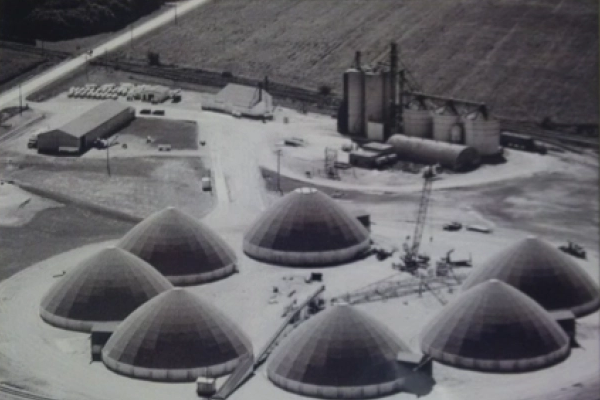
The site includes eight single domes, a double dome for potash, and a segmented-bay warehouse. Together, these facilities provide a storage capacity of 82,000 metric tonnes of product, including urea, muriate of potash, ammonium sulphate, monoammonium phosphate, and several other fertilizers.
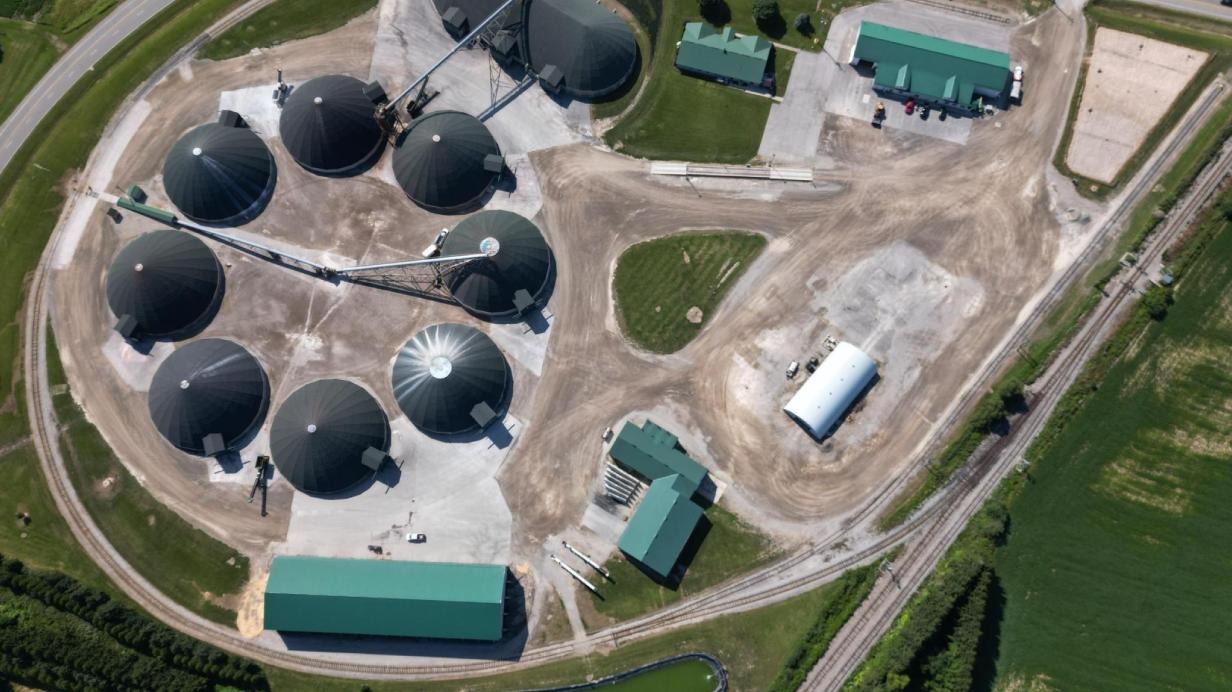
Each year, the terminal receives and unloads approximately 2,100 railcars. About 90% of incoming product arrives by rail, while the team also unloads a number of trucks from the Port of Hamilton, taking advantage of Sollio Agriculture’s strategic marine transportation network that helps supply its operations across Canada. When planting season begins, the terminal’s inventory can be emptied in just a few days as products are loaded onto trucks and delivered to Ontario retailers, who then distribute them to local growers.
This large-scale logistical operation runs with impressive precision. According to Scott Rae, the team loads an average of 140 trucks per day during peak season—the equivalent of one truck every four minutes.
Rail activity is just as busy, with an average of 22 railcars unloaded daily. The terminal is constantly filling and emptying at the same time: While trucks are delivering product to farms, incoming railcars replenish inventory.
“If a train doesn’t arrive on time, operations can be significantly disrupted,” says Rae, emphasizing the importance of well-coordinated rail deliveries.
“Among all these numbers, the most impressive is that the Agromart terminal handles more than 193,000 metric tonnes of product annually,” adds the manager. “That makes us a major inland terminal.”
Designed with environment and safety in mind
The terminal recently installed a stormwater management system that captures the first 25 millimetres of rainfall, treats the water, and then releases it into the municipal draining system. This investment was made to reduce the operations’ impact on the environment and the local community as volumes handled by the terminal continued to grow.
Despite a demanding schedule that can extend to seven days a week during peak seasons, the strong team spirit remains intact.
“Loading, unloading, maintenance… No two days are ever the same here. That’s what I love about it!” says Rae, who also keeps a close watch on site and employee safety.
The manager sums up the Agromart terminal in three words: efficient, safe, and reliable.
“Things move quickly, but we know where we’re going, and we do things the right way,” he concludes proudly.
Agromart terminal FAQ
Where is the Agromart terminal located?
The Agromart terminal is located in Belton, north of Thorndale, Ontario. It supplies 26 retailers across the province.
How many employees work there?
Six full-time employees work at the terminal year-round. During the busy spring, one or two seasonal employees join the team to help support operations.
What is the Agromart terminal’s storage capacity?
The terminal has a fertilizer storage capacity of 82,000 metric tonnes, spread across nine domes and a warehouse.
What year was the terminal built?
Built in 1997 with seven original storage domes, the terminal has continued to evolve to meet growing demand. Over the years, an eighth single dome, a double dome, and a segmented-bay warehouse were added in several phases. More recently, a biofiltration basin was installed on site: Plants, rocks, and wood chips work together across four treatment zones to remove as much fertilizer as possible from the water before it’s discharged, helping to further reduce the facility’s environmental footprint.